Leeds United isn’t just a football club—it’s a legacy wrapped in passion, grit, and unforgettable moments. From glory days to dramatic comebacks, this Yorkshire powerhouse has shaped English football history.
1. The Origins and Early History of Leeds United

Leeds United’s story begins in the early 20th century, rooted in the heart of West Yorkshire. The club emerged from the ashes of a previous team, setting the stage for what would become one of England’s most iconic football institutions.
Formation and Founding Years (1919–1920)
Leeds United was officially formed in 1919, following the dissolution of Leeds City, a club expelled due to financial irregularities during World War I. The Football League needed a new team to represent the city, and a group of local businessmen stepped in to create Leeds United.
The name ‘United’ was chosen to symbolize unity among the city’s football supporters and to reflect a fresh start. The club was admitted into the Football League’s Second Division in 1920, marking the beginning of their official competitive journey.
- Leeds United was founded on October 17, 1919.
- The club’s first manager was Herbert Chapman, who later became a legendary figure in English football.
- They played their first match in August 1920, defeating Port Vale 3–0 at Elland Road.
Early Struggles and Rise Through the Divisions
Despite a promising start, Leeds United spent decades oscillating between the Second and Third Divisions. They lacked consistent leadership and financial backing, which hindered long-term success.
It wasn’t until the 1950s and 60s that the club began to show signs of transformation. The appointment of Don Revie as player-manager in 1961 marked a turning point in the club’s trajectory.
“We didn’t just want to win; we wanted to dominate.” — Don Revie on his philosophy at Leeds United.
2. The Golden Era: Dominance Under Don Revie
No chapter in Leeds United’s history shines brighter than the era led by Don Revie. From the mid-1960s to the mid-1970s, the club became a powerhouse, redefining English football with a blend of tactical discipline and relentless aggression.
Revie’s Revolutionary Tactics
Don Revie implemented a structured, possession-based style that was ahead of its time. He emphasized teamwork, fitness, and meticulous preparation. His use of a deep-lying center-forward, often himself in earlier years, allowed greater control over midfield tempo.
Revie also introduced rigorous training regimes and sports science methods that were uncommon at the time. This professionalism elevated Leeds United above many of their contemporaries.
- Revie transformed Leeds from a mid-table side into league champions in just five years.
- He fostered a strong team culture, with players like Billy Bremner, Jack Charlton, and Norman Hunter forming the backbone of the squad.
- His attention to detail extended to diet, recovery, and even media relations.
Major Trophies and European Campaigns
Under Revie, Leeds United won two First Division titles (1968–69, 1973–74), one FA Cup (1972), one League Cup (1968), and two Inter-Cities Fairs Cups (1968, 1971). These achievements cemented their status as one of Europe’s elite clubs.
Their 1975 European Cup final appearance remains one of the most controversial in football history. Facing Bayern Munich in Paris, Leeds were denied two apparent penalties and lost 2–0 amid allegations of biased officiating.
Despite the loss, the campaign showcased Leeds’ resilience and tactical sophistication on the continental stage. For more on this historic match, visit UEFA’s official archives.
3. The Decline and Relegation: A Fall from Grace
After Revie’s departure in 1974 to manage the England national team, Leeds United entered a period of decline. The loss of their visionary leader, combined with aging stars and poor recruitment, led to a rapid fall from the top.
Post-Revie Instability and Managerial Chaos
Revie’s successor, Brian Clough, lasted only 44 days—a record for brevity in English football management. Clough’s abrasive style and criticism of Revie’s methods alienated the players, leading to his swift dismissal.
Over the next two decades, Leeds cycled through numerous managers, none of whom could restore the club’s former glory. The lack of a clear footballing identity eroded fan confidence and on-pitch performance.
- Brian Clough’s tenure remains one of the shortest in football history.
- Leeds were relegated from the First Division in 1982, ending 16 consecutive seasons in the top flight.
- Financial mismanagement and dwindling attendances further weakened the club.
Descent into the Third Tier
By the early 1990s, Leeds United had plummeted to the Third Division—the lowest point in their history. This was a shocking fall for a club that had once competed for European honors.
However, the appointment of Howard Wilkinson as manager in 1988 laid the groundwork for a revival. Wilkinson instilled discipline and rebuilt the squad with a mix of youth and experience.
Their 1990 Second Division title win signaled a return to form, culminating in the 1991–92 First Division championship—the last before the Premier League era began. For a detailed timeline of this era, check BBC Sport’s coverage.
4. The Premier League Boom and Financial Collapse
The 1990s brought both triumph and tragedy for Leeds United. After winning the final First Division title, the club became a prominent force in the early Premier League, known for developing world-class talent and competing in Europe.
Golden Generation and Youth Academy Success
Leeds United’s youth academy produced a golden generation of players, including Harry Kewell, Alan Smith, Jonathan Woodgate, and Lee Bowyer. These homegrown talents formed the core of a dynamic, attacking team.
Under managers like David O’Leary, Leeds reached the UEFA Champions League semi-finals in 2001, defeating giants like Lazio and AC Milan along the way. This run captured the imagination of fans worldwide.
- The 1999–2002 squad is often regarded as one of the most exciting in English football.
- Leeds invested heavily in youth development, with their academy becoming a model for other clubs.
- Players like Kewell and Smith later moved to top clubs such as Liverpool and Manchester United.
Financial Mismanagement and Relegation
Despite on-pitch success, Leeds United made reckless financial decisions. They spent heavily on transfers and player wages, betting on sustained Champions League qualification to cover costs.
When the team failed to qualify for Europe after 2003, the club faced a financial crisis. Mounting debts forced the sale of key players, weakening the squad and leading to relegation from the Premier League in 2004.
The financial collapse was so severe that Leeds entered administration in 2007, resulting in a 15-point deduction and relegation to League One—the third tier of English football. For an in-depth financial analysis, visit The Guardian’s football section.
5. The Road to Recovery: Promotion and Premier League Return
After years of turmoil, Leeds United began a slow but determined climb back to the top. Fan loyalty, strategic leadership, and a return to sustainable footballing principles paved the way for revival.
Massimo Cellino’s Controversial Ownership
In 2014, Italian businessman Massimo Cellino purchased the club. His tenure was marked by instability—frequent managerial changes, squad overhauls, and clashes with fans and authorities.
Despite the chaos, Cellino’s investment brought in key players and modernized Elland Road’s infrastructure. His ownership, though turbulent, kept Leeds competitive in the Championship.
- Cellino appointed 10 different managers during his five-year ownership.
- He oversaw the redevelopment of the East Stand at Elland Road.
- His legal battles with football authorities were widely covered in the media.
Marcelo Bielsa and the 2020 Promotion
The turning point came in 2018 with the appointment of Marcelo Bielsa as manager. Known for his intense, high-pressing style, Bielsa instilled a new philosophy that revitalized the team.
Under Bielsa, Leeds United played an exhilarating brand of football, winning 28 of 46 games in the 2019–20 Championship season. They secured promotion to the Premier League after a 16-year absence, finishing as champions.
Bielsa’s impact went beyond results—he restored pride, identity, and global attention to Leeds United. His emotional connection with fans was evident when he bowed to the stands after promotion was confirmed. For more on Bielsa’s tactics, see The Week’s football analysis.
6. Life in the Modern Premier League: Challenges and Identity
Returning to the Premier League was a dream realized, but survival proved difficult. Leeds United faced the harsh realities of modern football: financial disparity, tactical evolution, and squad depth requirements.
Struggles with Relegation Battles
In their first three seasons back (2020–2023), Leeds consistently battled against relegation. Despite moments of brilliance, defensive vulnerabilities and inconsistent form plagued their campaigns.
Bielsa was replaced by Jesse Marsch in 2022, but results didn’t improve significantly. The club narrowly avoided relegation in 2021 and 2022, only to be relegated in 2023 after a dramatic final day.
- Leeds conceded 79 goals in the 2022–23 season, the second-worst defensive record in the league.
- Their high-pressing style, while exciting, left them exposed to counter-attacks.
- Key players like Raphinha and Kalvin Phillips were sold, weakening the squad.
Rebuilding in the Championship (2023–2024)
After relegation, Leeds United entered a rebuilding phase. New manager Daniel Farke was appointed to bring tactical stability and a more balanced approach.
The club focused on youth integration, smart recruitment, and financial prudence. With a renewed emphasis on squad cohesion, Leeds aimed for an immediate return to the Premier League.
Fans remained hopeful, drawing strength from past comebacks. The 2023–24 season saw improved performances, with Leeds competing near the top of the Championship table.
7. Leeds United’s Culture, Fanbase, and Global Impact
Beyond trophies and league tables, Leeds United’s true strength lies in its culture and passionate fanbase. The club’s identity is built on resilience, loyalty, and an unbreakable bond between the team and its supporters.
The Elland Road Experience
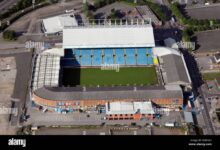
Elland Road, the club’s home since 1919, is more than a stadium—it’s a fortress of emotion. With a capacity of over 37,000, it has hosted countless historic matches and legendary figures.
Matchdays at Elland Road are known for their electric atmosphere, with fans singing from kick-off to final whistle. The South Stand, in particular, is famed for its vocal support and choreographed displays.
- Elland Road hosted games during the 1966 and 1996 UEFA European Championships.
- The stadium has undergone multiple renovations to meet modern safety and comfort standards.
- It remains one of the most intimidating venues for visiting teams in the Championship.
Global Fanbase and Rivalries
Leeds United boasts a global following, with official supporters’ clubs in over 50 countries. The club’s dramatic history and passionate style of play have attracted fans worldwide.
Traditional rivalries include matches against Manchester United, known as the ‘Rose rivalry,’ and local clashes with Sheffield United and Huddersfield Town. These fixtures are charged with historical and regional tension.
“Once a Blue, always a Blue.” — A common chant among Leeds United supporters.
What year was Leeds United founded?
Leeds United was founded in 1919, following the disbandment of Leeds City. The club was officially established on October 17, 1919, and joined the Football League in 1920.
Who is the most iconic manager in Leeds United history?
Don Revie is widely regarded as the most iconic manager in Leeds United history. He led the club to its greatest successes in the 1960s and 70s, transforming it into a dominant force in English and European football.
When did Leeds United win the Premier League?
Leeds United has never won the Premier League. Their last top-flight title was the First Division championship in 1991–92, the season before the Premier League was formed.
Why was Brian Clough’s tenure at Leeds so short?
Brian Clough’s tenure lasted only 44 days because his confrontational style and criticism of Don Revie’s legacy alienated the players. He failed to win over the squad or establish authority, leading to his dismissal in 1974.
Did Leeds United ever win the Champions League?
No, Leeds United has never won the Champions League. Their closest attempt was in 1975 when they reached the final but lost 2–0 to Bayern Munich in a controversial match.
Leeds United’s journey is a testament to the highs and lows of football. From the glory of the Revie era to the despair of relegation and the triumph of promotion, the club has endured it all. Their story is not just about trophies, but about identity, resilience, and the unyielding spirit of their fans. As they aim for a return to the Premier League, one thing remains certain: Leeds United will always fight.
Further Reading:
